
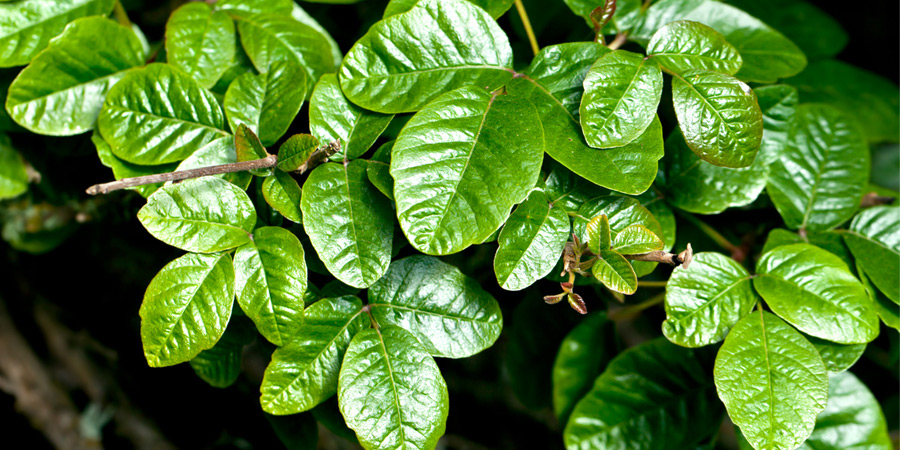
Leaves of three? Let them be. Avoid poison ivy and other poisonous plants.
Types of poisonous plants
Avoid these plants! Recognize the leaf patterns of these poisonous plants and avoid contact by dressing appropriately. Wear socks, boots, pants, long sleeves and gloves to cover as much skin as possible. Plus, try barrier creams – like Ivy Block® – proven to be effective against these plants.
Poison Ivy
- Three leaflets connected to a single stem
- Young leaves are light green and have serrated edges
- Grows as a vine or shrub
- Leaves turn bright red in the fall
- White berries can be found on the plant
- In the wintertime, leaves will be gone, but red, hairy roots and white berries become more visible
- Found in all parts of the United States except California, Hawaii and Alaska
Poison Oak
- Three leaflets connected to a single stem
- Leaves resemble oak tree leaves
- Grows as a vine or shrub
- In the winter months, poison oak will lose its leaves and have fuzzy, reddish-brown sticks with alternating stubs
- Found on the West Coast and Southeastern states
Poison Sumac
- Nine to 13 leaflets per stem
- Leaves are round with pointed tips
- Grow as a shrub or small tree
- In the winter, poison sumac will be leafless. Look for thin, empty stems hanging from branches that look similar to grape stems
- Found in swampy areas of the Southeast
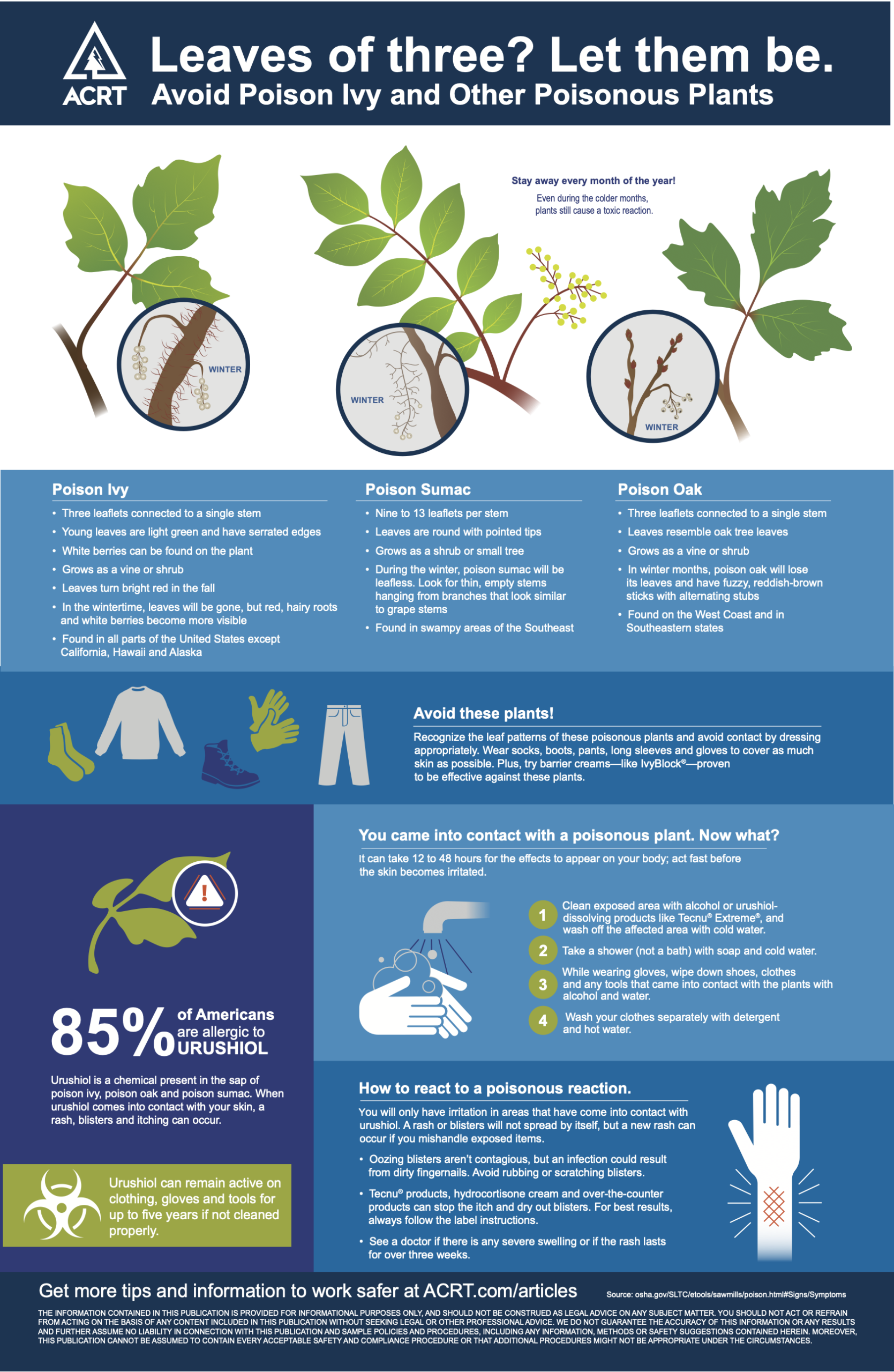
Urushiol – the irritant inside poisonous plants
85% of all Americans are allergic to Urushiol. Urushiol is a chemical present in sap of poison ivy, poison oak and poison sumac. When Urushiol comes into contact with your skin, a rash, blisters and itching can occur. Urushiol can remain active on clothing, gloves and tools for up to five years if not cleaned properly.
You came into contact with a poisonous plant. Now what?
It can take 12 to 48 hours for the effects to appear on your body; act fast before the skin becomes irritated.
- Clean exposed area with alcohol or Urushiol-dissolving products like Technu Extreme® and wash off the affected area with cold water.
- Take a shower (not a bath) with soap and cold water.
- While wearing gloves, wipe down shoes, clothes and any tools that came into contact with the plants with alcohol and water.
- Wash your clothes separately with detergent and hot water.
How to react to a poisonous reaction
You will only have irritation in areas that have come into contact with Urushiol. A rash or blisters will not spread by itself, but a new rash can occur if you mishandle exposed items.
- Oozing blisters aren’t contagious but an infection could result from dirty fingernails. Avoid rubbing or scratching blisters.
- Technu, hydrocortisone cream and over-the-counter products can stop the itch and dry out blisters. For best results, always follow the label instructions.
- See a doctor if there is any severe swelling or if the rash lasts for over three weeks.